
Digital Marketing Agency in Hyderabad That Focuses on Business Growth
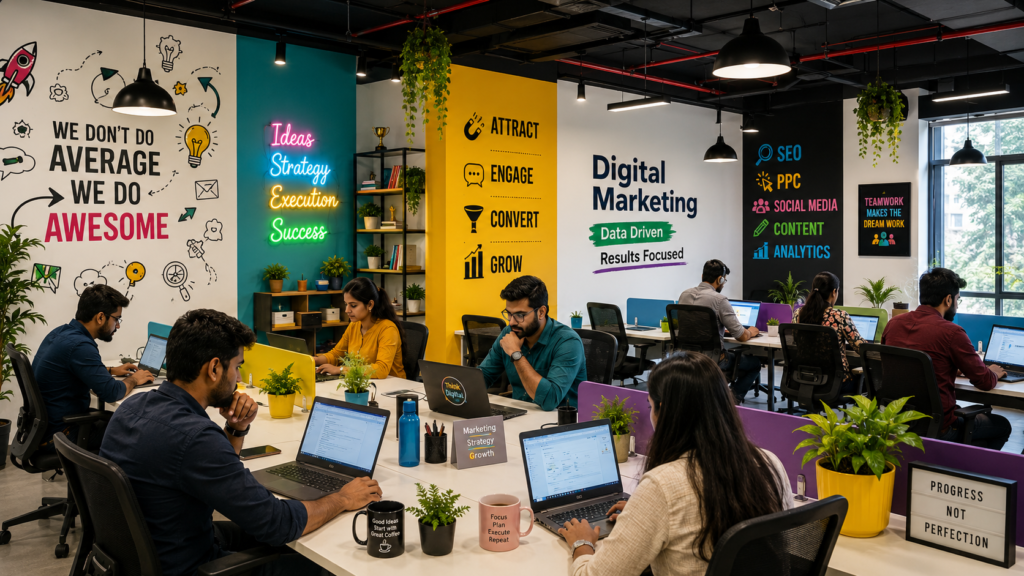
A digital marketing agency should do more than make your brand visible online.
It should help the right people discover your business, understand what you offer, trust your brand, and take the next step — whether that means making an enquiry, booking a consultation, visiting your location, requesting a quotation, or buying from you.
LerdLeap Marketing Agency is a Hyderabad-based digital marketing agency helping businesses build visibility, generate qualified leads, strengthen their brands, and create measurable digital growth.
Our approach brings together SEO, Google Ads, performance marketing, social media, content marketing, lead generation, local SEO, branding, analytics, and creative marketing instead of treating each channel as a separate activity.
For businesses that need more than online presence, the goal is simple:
Get discovered. Get trusted. Get enquiries. Grow.
Why Businesses Need More Than Marketing Services
Many companies believe marketing means publishing social media posts, running Google Ads, or improving website rankings.
These activities are important, but they are only individual tools.
Imagine constructing a building.
Bricks, cement, steel, and paint are all necessary, but without a proper blueprint, they don’t create a strong structure.
Digital marketing works the same way.
SEO, Google Ads, Meta Ads, content marketing, email campaigns, landing pages, analytics, and conversion optimisation only create value when they work together toward a common business objective.
Businesses often struggle because every marketing activity operates independently.
- Social media focuses on followers.
- SEO focuses on rankings.
- Ads focus on clicks.
- Designers focus on visuals.
- Sales teams focus on conversions.
Nobody connects the complete customer journey.
An experienced Digital Marketing Agency creates one integrated strategy where every channel supports the others, helping customers move naturally from discovering your business to becoming paying customers.
What Is a Digital Marketing Agency?
A digital marketing agency helps businesses use online channels to reach potential customers and turn attention into measurable business outcomes.
Those channels can include:
- Search engines
- Google Ads
- Social media
- Websites
- Content
- YouTube
- Local search
- Online communities
- Digital platforms and remarketing
But digital marketing is not simply about being present on all these platforms.
The real challenge is deciding where your customers are, what they are searching for, what message will convince them, and what should happen after they click.
For example, a real estate developer may need Google Search visibility for high-intent property searches, Meta campaigns for demand generation, landing pages for enquiries, remarketing for interested visitors, and content that answers location, pricing, amenities, and investment questions.
A healthcare business may need a completely different strategy.
That is why LerdLeap starts with the business objective before choosing the marketing channel.
What Does a Digital Marketing Agency Do?
A digital marketing agency can manage different parts of a company’s online growth system.
At LerdLeap, our work can include:
Search Engine Optimization
SEO helps your business appear when potential customers search for products, services, problems, or solutions related to your business.
Our SEO work can cover:
- Keyword and search-intent research
- Technical SEO
- On-page SEO
- Content strategy
- Local SEO
- Google Business Profile optimization
- Internal linking
- Structured data
- Competitor gap analysis
- Content clusters
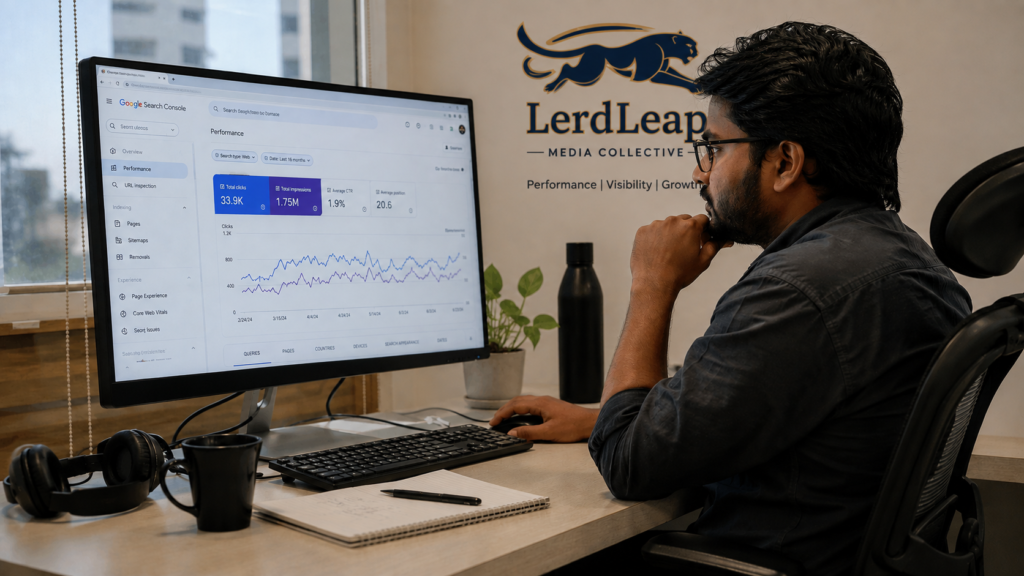
- Search Console analysis
- Conversion-focused landing pages
- Organic visibility tracking
The objective is not simply to rank for one keyword.
The bigger goal is to build search visibility around the topics your customers actually care about.
Google Ads and Paid Search
SEO takes time. Paid search can help businesses reach people who are already searching for a solution.
Google Ads can be useful when your audience has clear commercial intent.
For example:
- “digital marketing agency Hyderabad”
- “real estate marketing agency Hyderabad”
- “villa projects near Kokapet”
- “SEO company Hyderabad”
- “digital marketing services for hospitals”
But launching an advertisement is only one part of the process.
A strong paid search campaign also requires:
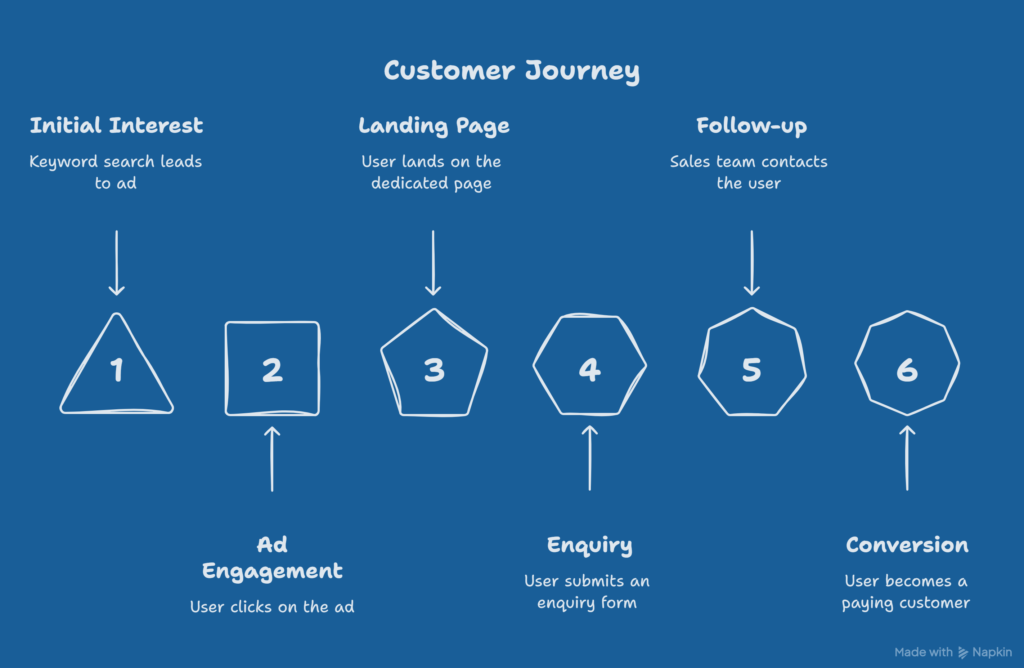
Keyword → Ad → Landing Page → Enquiry → Follow-up → Conversion
If one part of that journey is weak, increasing the advertising budget may simply increase wasted spend.
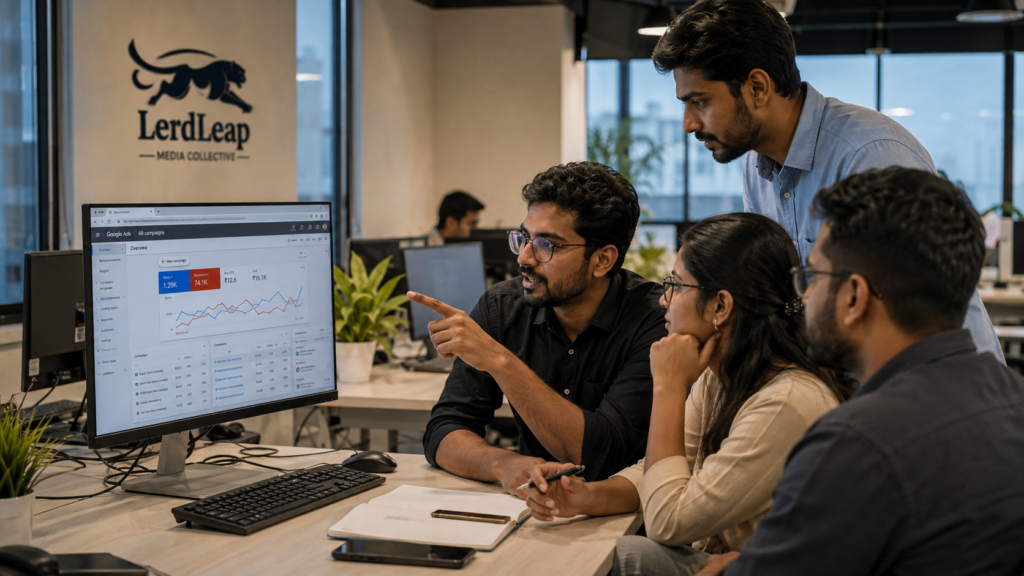
LerdLeap focuses on campaign structure, search intent, landing-page experience, audience quality, conversion tracking, and ongoing optimization.
Performance Marketing
Performance marketing connects advertising activity with measurable business outcomes.
Depending on the business, those outcomes may include:
- Qualified leads
- Sales enquiries
- Website purchases
- Calls
- Registrations
- Bookings
- Appointments
- Property visits
- Product enquiries
We work across platforms such as Google Ads, Meta Ads, YouTube and other relevant digital channels.
The important part is not simply reporting impressions or clicks.
A business needs to understand:
How much did we spend?
What did we get?
How many leads were qualified?
How many converted?
What did each customer actually cost?
That is where performance marketing becomes a business function rather than just advertising.
Social Media Marketing
Social media is often treated as a posting activity.
Posting consistently matters, but posting alone does not create a marketing strategy.
A useful social media strategy should connect:
Content + Audience + Brand Message + Distribution + Engagement + Conversion
Depending on the business, social media can be used to:
- Build brand awareness
- Educate customers
- Showcase products or projects
- Build trust
- Generate enquiries
- Support paid campaigns
- Promote offers
- Create remarketing audiences
- Strengthen brand recall
LerdLeap combines creative content with campaign objectives instead of treating social media as a separate department disconnected from business goals.
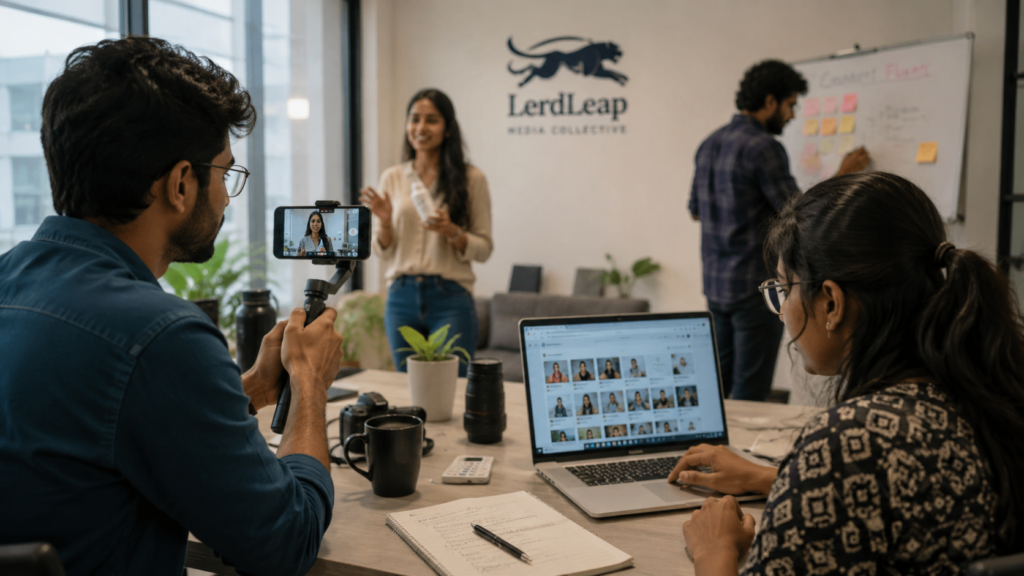
Content Marketing
People rarely become customers after seeing one advertisement.
They usually have questions first.
Is the company trustworthy?
How does the service work?
What does it cost?
Which option is suitable?
What are the advantages and limitations?
Who should I choose?
Good content helps answer those questions before the sales conversation begins.
Our content strategy can include:
- Service pages
- Blog content
- Location pages
- Industry guides
- Comparison content
- Case studies
- FAQs
- Landing pages
- Educational content
- Thought-leadership articles
The goal is to create content that can be useful in Google Search, AI search experiences, social media, and the customer’s buying journey.
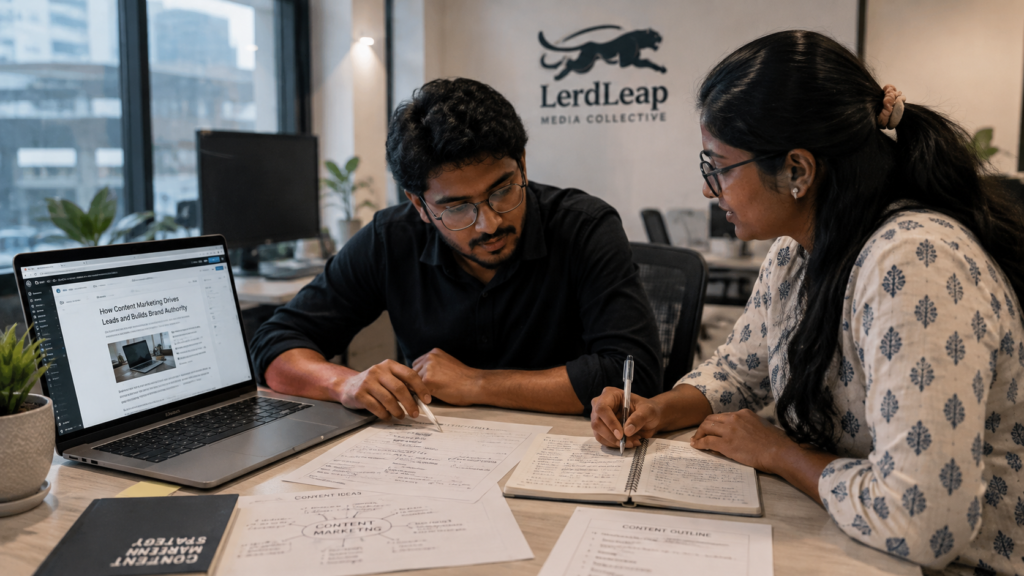
Lead Generation for Businesses That Need Enquiries
Traffic is useful only when it contributes to the business.
A website receiving thousands of visitors but generating very few relevant enquiries has a conversion problem, not simply a traffic problem.
LerdLeap approaches lead generation through multiple stages:
1. Find the right audience
Who is most likely to become a customer?
2. Understand their intent
Are they researching, comparing, or ready to enquire?
3. Create the right offer
What reason does the visitor have to take action?
4. Build the conversion path
The landing page, form, call option, WhatsApp option, or booking flow should make the next step clear.
5. Track what happens after the lead
A lead should not be considered successful simply because a form was submitted.
The real question is whether the lead became a meaningful business opportunity.
Local SEO for Hyderabad Businesses
For businesses serving a specific location, appearing in local search can be extremely valuable.
A person searching for:
“digital marketing agency near me”
has a different intent from someone searching:
“what is digital marketing?”
Local SEO helps businesses build visibility for location-based searches.
This can involve:
- Google Business Profile optimization
- Local keyword research
- Location-specific service pages
- Business information consistency
- Reviews and reputation
- Local content
- Relevant citations
- Location signals
- Internal linking
- Local search performance monitoring
For Hyderabad businesses, this can extend beyond the city name.
Depending on the business, relevant search demand may come from areas such as Gachibowli, Kokapet, Madhapur, HITEC City, Narsingi, Jubilee Hills, Kondapur and other surrounding locations.
The important point is to create useful location content rather than simply adding city names to every page.
Real Estate Digital Marketing in Hyderabad
Real estate is one of the areas where digital marketing needs a different approach.
A property buyer may take weeks or months to make a decision.
They may search for:
- Properties in a particular location
- Villas near Hyderabad
- Plots near the ORR
- Farm plots
- Gated communities
- Property prices
- Developers
- Amenities
- Connectivity
- Investment potential
- Reviews and reputation
This means real estate marketing cannot depend on one advertisement.
It needs a connected system involving:
Search + Paid Media + Social Media + Content + Creative + Landing Pages + Lead Management + Remarketing
LerdLeap has a strong focus on marketing for real estate developers, builders, gated communities, villa projects and plotted developments.
We understand that generating a lead is only the beginning.
The marketing system needs to help sales teams identify which enquiries are worth following up, where those enquiries originated, and which campaigns are producing meaningful opportunities.
Why Choose LerdLeap as Your Digital Marketing Agency?
There are many agencies offering digital marketing services.
The right question is not:
“Which agency offers the most services?”
The better question is:
“Which agency understands what my business needs to achieve?”
LerdLeap brings together digital, creative, performance and traditional marketing capabilities under one strategy.
Business-first thinking
We begin with the business objective rather than starting with a list of marketing tools.
Search and performance together
Organic search can build long-term visibility while paid campaigns can capture immediate demand. Both can work together instead of competing for attention.
Lead quality matters
We don’t look at lead volume in isolation. Lead relevance and conversion potential matter too.
Content built around customer questions
Instead of publishing articles simply to fill a blog, we build content around search intent, customer problems and decision-making questions.
Hyderabad market understanding
Local market knowledge matters when targeting customers across Hyderabad’s different business and residential locations.
Real estate expertise
LerdLeap has a strong specialization in real estate marketing, including property developers, plotted developments, gated communities and villa projects.
Marketing beyond digital
LerdLeap combines digital marketing with experiential, traditional and creative marketing capabilities for businesses that need a broader brand and demand-generation strategy.
How Our Digital Marketing Process Works
A successful digital marketing strategy does not begin with posting content or launching ads.
It begins with understanding the business.
Step 1: Understand the Business
We study the product or service, target audience, market, locations, competitors, sales process and business objectives.
Step 2: Audit the Current Digital Presence
We review the website, search visibility, paid campaigns, social presence, content, conversion paths and analytics.
Step 3: Identify Opportunities
We identify gaps in search demand, content, paid media, branding, local visibility and conversion.
Step 4: Build the Strategy
The strategy connects the right channels with the right customer journey.
Step 5: Launch
Campaigns, content, landing pages and other marketing activities are implemented based on priorities.
Step 6: Measure
We monitor traffic, rankings, leads, cost per lead, conversion rates, engagement and other business-relevant metrics.
Step 7: Improve
Marketing should not remain unchanged after launch.
Data helps identify what is working, what is wasting resources and where the next opportunity exists.
How Much Does Digital Marketing Cost in Hyderabad?
There is no single digital marketing price that works for every business.
The budget depends on factors such as:
- Business size
- Industry
- Target location
- Competition
- Marketing objectives
- Number of channels
- Advertising budget
- Content requirements
- Website condition
- Sales cycle
- Expected lead or revenue targets
For example, an SEO-focused strategy and a large paid-media lead-generation campaign have completely different cost structures.
Instead of selecting a package only because it is inexpensive, businesses should first understand:
What outcome are we trying to achieve?
Then the marketing budget can be planned around that outcome.
How Do You Measure a Digital Marketing Agency?
A marketing report should tell you more than how many people saw an advertisement.
Depending on the campaign, useful metrics can include:
SEO
- Organic clicks
- Search impressions
- Search visibility
- Ranking trends
- Organic conversions
- Qualified organic leads
Google Ads
- Impressions
- Clicks
- CTR
- CPC
- Conversion rate
- Cost per conversion
- Lead quality
Social Media
- Reach
- Engagement
- Video views
- Website visits
- Leads
- Assisted conversions
Business Growth
- Qualified enquiries
- Sales opportunities
- Customer acquisition cost
- Revenue
- Return on advertising spend
- Conversion rate
The exact metrics should depend on the business model.
A metric is useful only when it helps you make a better business decision.
Digital Marketing Is Not Just About Rankings
Ranking on Google is valuable.
But a ranking by itself is not a business result.
Imagine two websites.
Website A ranks for 1,000 keywords but receives very little relevant traffic.
Website B ranks for 100 highly relevant commercial searches and generates consistent enquiries.
Which one is creating more business value?
That is why LerdLeap looks beyond rankings.
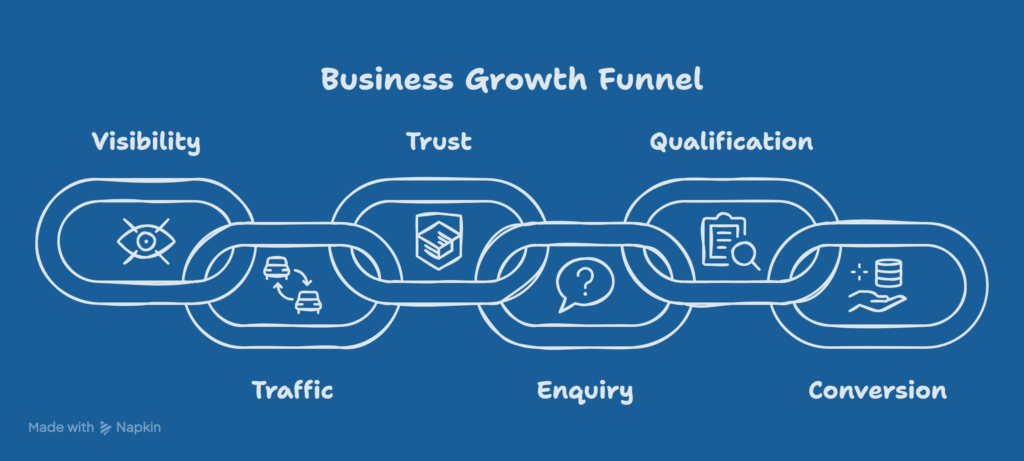
The broader digital marketing system should connect:
Visibility → Traffic → Trust → Enquiry → Qualification → Conversion → Growth
SEO is one part of that system.
Digital Marketing for Different Business Types
The strategy should change according to the customer journey.
Real Estate
Focus on location demand, project visibility, lead generation, remarketing, content and sales support.
Education
Focus on course-related searches, lead generation, student intent, content and conversion campaigns.
Healthcare
Focus on local search, service discovery, trust, reputation, informative content and appointment intent.
B2B Businesses
Focus on high-intent searches, expertise-driven content, LinkedIn, lead generation and longer sales journeys.
Local Businesses
Focus on Google Business Profile visibility, reviews, local search, location pages and calls or enquiries.
E-commerce
Focus on product discovery, paid search, shopping campaigns, content, conversion optimization and customer retention.
The channel may be similar.
The strategy should not be.
Digital Marketing Agency vs Doing Marketing In-House
Hiring an agency is not automatically the right decision for every business.
An in-house team can work well when a company already has the required specialists, systems and management capacity.
An agency can be useful when a business needs access to multiple capabilities without building every role internally.
For example, a company may need:
- SEO
- Paid advertising
- Content
- Creative design
- Social media
- Analytics
- Lead generation
- Branding
- Website optimization
Building a complete team for all these functions can take significant time.
A digital marketing agency can bring several of these capabilities together under one strategy.
The right choice depends on the company’s goals, internal resources and growth stage.
Questions to Ask Before Hiring a Digital Marketing Agency
Before signing a contract, ask:
What exactly will you do?
Ask for the actual activities, not just service names.
How will success be measured?
Make sure the agency connects marketing metrics with business outcomes.
Who will work on the account?
Know whether the strategy will be handled by specialists or passed between multiple teams.
How will you report results?
A useful report should explain what happened, why it happened and what happens next.
How do you handle poor-performing campaigns?
Marketing involves testing. Ask how the agency responds when an approach does not work.
Can you show relevant work?
Look for experience that is relevant to your industry, customer journey and business model.
How will you communicate?
Clear communication can be just as important as technical marketing skills.
LerdLeap Marketing Agency Hyderabad
LerdLeap is a Hyderabad marketing agency built around a simple idea:
Marketing should connect attention with business growth.
Our capabilities include:
- Digital Marketing
- SEO
- Local SEO
- Google Ads
- Performance Marketing
- Social Media Marketing
- Content Marketing
- Lead Generation
- Branding
- Creative Marketing
- Experiential Marketing
- Traditional Marketing
- Reputation & Brand Management
- Marketing Analytics
For businesses that need a combination of digital performance and brand-building, LerdLeap brings these capabilities together rather than treating every marketing activity as an isolated service.
Ready to Build a Digital Marketing Strategy Around Your Business?
You don’t need to be everywhere online.
You need to be visible where your customers are looking, communicate a message they understand, and make it easy for them to take the next step.
LerdLeap Marketing Agency helps businesses in Hyderabad build that system through search, paid media, content, social media, branding, creative and performance marketing.
Have a business growth goal in mind? Let’s build the marketing strategy around it.
A digital marketing agency helps businesses attract, engage and convert customers through online channels such as search engines, paid advertising, social media, websites and content. The exact strategy depends on the business, audience and growth objective.
An agency can give a business access to multiple marketing skills and platforms without requiring the company to build every capability internally. It can also provide an outside perspective on strategy, execution and performance.
LerdLeap provides SEO, local SEO, Google Ads, performance marketing, social media marketing, content marketing, lead generation, branding, creative marketing, experiential marketing, traditional marketing, reputation management and analytics.
Neither is universally better. SEO can build organic visibility over time, while Google Ads can help capture paid search demand immediately. Many businesses can benefit from using both based on their goals and budget.
SEO timelines vary based on competition, website condition, search demand, content quality, authority and the market being targeted. Some improvements can appear relatively quickly, while meaningful organic growth generally requires consistent work over time.
There is no universal budget. The appropriate investment depends on your industry, competition, target audience, customer value, sales cycle and growth target. The budget should be planned around the expected business outcome rather than choosing a package purely by price.
Yes. Lead generation can combine SEO, Google Ads, Meta Ads, landing pages, content, remarketing and conversion optimization. However, lead volume alone should not be the only measure. Lead quality and eventual conversion matter.
Yes. Real estate is one of LerdLeap’s key areas of marketing expertise, including developers, builders, gated communities, villa projects and plotted developments.
Search
Categories
Tags
All Services
- Digital Marketing Agency in Hyderabad That Focuses on Business Growth
- Experiential Marketing Agency: Crafting Immersive Brand Experiences
- Traditional Marketing Agency: Maximizing Your Brand’s Reach
- Creative Marketing Agency: Transforming Ideas into Impactful Experiences
- Performance Marketing Hyderabad | ROI-Focused Google & Meta Ads Agency
- Reputation & Brand Management