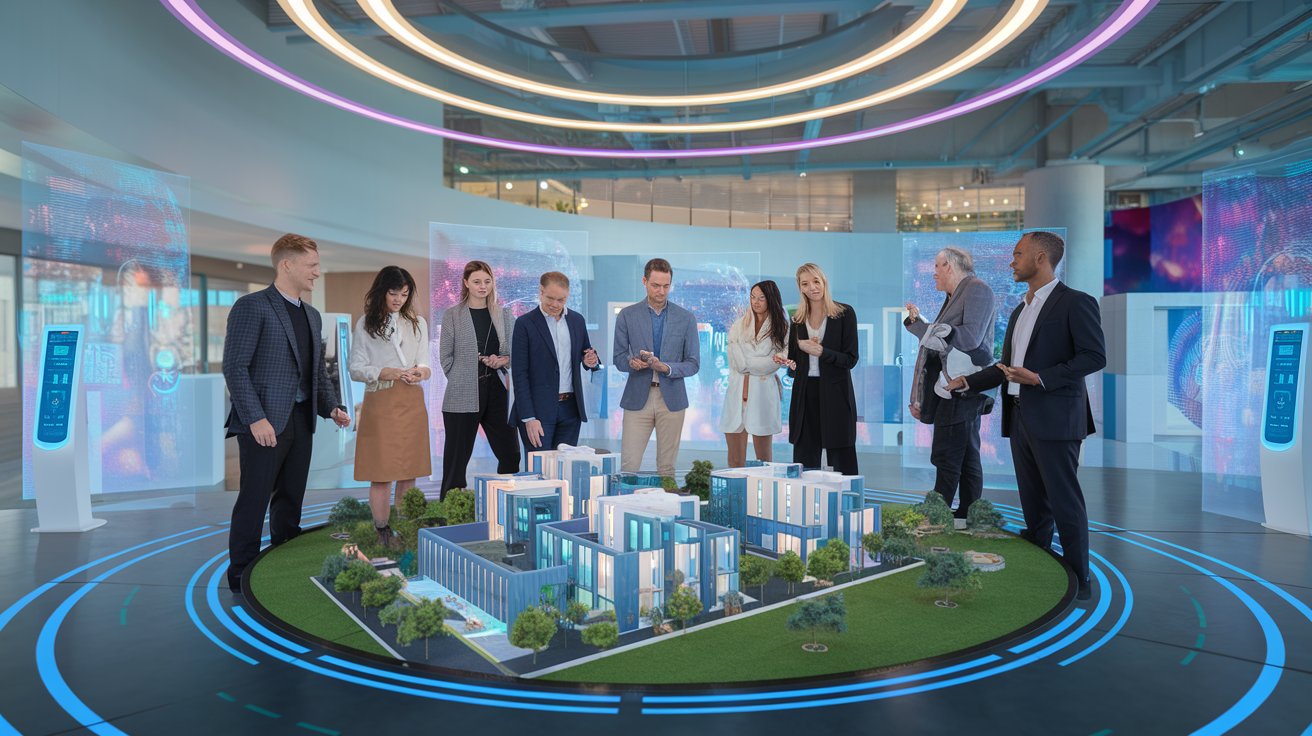
Experiential Marketing Agency: Crafting Immersive Brand Experiences
Turn Brand Interactions into Real Customer Experiences That People Remember
People don’t remember another advertisement.
They remember the product they touched.
The conversation they had.
The challenge they completed.
The surprise they experienced.
The photo they shared.
That is why experiential marketing has become one of the fastest-growing customer acquisition channels for brands in Hyderabad.
Whether it is a product launch inside an IT park, an apartment community activation, a mall engagement campaign, a corporate employee experience, or a real estate launch event, customers today expect participation—not just promotion.
At LerdLeap, we design experiential marketing campaigns that help businesses create measurable engagement instead of temporary visibility. Every campaign is planned around one question:
“What should people do, feel, remember, and share after interacting with your brand?”
That single question shapes every activity we build.
Experiential Marketing Agency in Hyderabad That Builds Experiences Around Business Goals
Many agencies start with event ideas.
We start with customer behaviour.
Before recommending an activation, we study:
- Where your audience spends time
- Why they would stop and engage
- What motivates them to participate
- Which experience naturally leads to enquiries or sales
- How success will be measured after the campaign
Instead of creating activities that simply look attractive on social media, we design experiences that support measurable business objectives.
For one brand, that may mean collecting qualified leads.
For another, it could mean increasing product trials.
A real estate developer may need apartment walk-ins.
A retail business may want in-store footfall.
A technology company may focus on employee engagement.
The experience changes because the objective changes.
That planning process is what separates meaningful experiential marketing from entertainment.
Why Experiential Marketing Works Better Than Traditional Promotions
Consumers in Hyderabad are exposed to thousands of advertisements every week.
Most disappear within seconds.
Experiences stay longer because people become part of the story.
Instead of watching a promotion, they participate in it.
Instead of hearing about a product, they test it.
Instead of reading features, they discover value through interaction.
This creates stronger emotional recall, higher trust, and more conversations between customers.
Research in consumer psychology consistently shows that people retain experiences more effectively than passive advertising because active participation increases attention, memory, and emotional connection.
For businesses, that often translates into:
- Higher brand recall
- Longer engagement time
- Better-quality conversations
- Increased social sharing
- Stronger word-of-mouth
- Higher conversion opportunities
Hyderabad Is One of India’s Strongest Cities for Experiential Marketing
Experiential campaigns perform differently in every city.
Hyderabad offers a unique advantage because multiple high-engagement audiences exist within a relatively connected urban ecosystem.
Brands can reach professionals in technology parks during weekdays, families in premium residential communities during evenings, students across universities, shoppers in destination malls, startup founders at networking events, and investors through exhibitions—all within the same metropolitan region.
This diversity allows businesses to create highly targeted experiences instead of running one generic campaign for everyone.
Some of the strongest experiential marketing locations include:
IT Parks
Technology professionals respond well to productivity demonstrations, wellness experiences, AI showcases, fintech activations, and product sampling.
Premium Apartment Communities
Families spend more time inside gated communities than ever before.
Weekend engagement programs, children’s activities, fitness experiences, sustainability workshops, and lifestyle showcases often generate quality conversations in these environments.
Shopping Malls
Mall visitors are already in discovery mode.
Interactive games, digital installations, contests, product demonstrations, and immersive brand zones encourage spontaneous participation.
Educational Institutions
Students are early adopters of new products and actively share memorable experiences online.
Campus activations often create significant organic visibility when designed correctly.
Corporate Offices
Employee engagement has become an important marketing opportunity.
Health campaigns, financial awareness sessions, technology showcases, food experiences, and innovation challenges create meaningful interaction while supporting employer branding.
Our Original Campaign Planning Framework
The LerdLeap Experience Journey™
Most experiential campaigns fail because they focus only on the event day.
Customer experience actually begins much earlier and continues long after the activation ends.
To solve this, our team follows a five-stage planning framework.
Stage 1 — Discover
Before proposing ideas, we understand:
- Business goals
- Audience behaviour
- Competition
- Campaign constraints
- Success metrics
- Venue opportunities
Many expensive campaigns underperform simply because this stage is skipped.
Stage 2 — Design
Instead of selecting activities first, we design the customer’s journey.
Every interaction is planned.
- First impression
- Curiosity trigger
- Participation point
- Brand interaction
- Lead capture
- Social sharing opportunity
- Follow-up communication
When each step connects naturally, engagement becomes much higher.
Stage 3 — Deliver
Execution involves much more than logistics.
Our focus includes:
- Crowd flow
- Staff interaction quality
- Queue management
- Brand consistency
- Digital integration
- Live monitoring
- Real-time troubleshooting
Every detail influences customer perception.
Stage 4 — Measure
Unlike traditional event companies, we believe every experiential campaign should produce measurable insights.
Depending on campaign objectives, we monitor metrics such as:
- Visitor participation rate
- Average engagement time
- Qualified leads collected
- Product demonstrations completed
- QR code interactions
- Social media mentions
- User-generated content
- Footfall uplift
- Appointment bookings
- Sales enquiries
Measurement transforms an event into a marketing investment.
Stage 5 — Improve
Every campaign generates valuable behavioural data.
Instead of ending with an event report, we identify:
- Which experiences attracted the highest participation
- Which audience segments converted better
- Which locations generated stronger engagement
- Which activities produced the highest ROI
- Recommendations for future campaigns
Continuous improvement helps brands make each activation more effective than the previous one.
What Makes Our Experiential Marketing Different?
Many campaigns create excitement for one day.
We build campaigns that continue generating conversations after the event ends.
Our planning focuses on four measurable outcomes:
More Meaningful Conversations
Interactions are designed to encourage genuine discussions instead of quick giveaways.
Better Lead Quality
Rather than collecting hundreds of random contacts, campaigns encourage participation from genuinely interested prospects.
Stronger Brand Recall
Customers remember experiences that involve emotion, participation, and storytelling.
Content That Continues Working
Every activation is designed to generate authentic photos, videos, testimonials, and social content that can be repurposed across future marketing campaigns.
Types of Experiential Marketing Campaigns in Hyderabad That Create Measurable Business Impact
Every business has different customers, buying cycles, and marketing goals. A campaign that attracts families in a gated community may not work for software professionals in an IT park. Likewise, a retail launch requires a different experience than a luxury real estate project.
Instead of offering one standard activation package, we recommend selecting the campaign format based on where your audience spends time, how they make purchase decisions, and what action you want them to take after the interaction.
Below are the experiential marketing formats that consistently perform well across Hyderabad.
Apartment Community Activations
Reach Families Where They Spend Their Weekends
Hyderabad has witnessed rapid growth in gated communities across areas such as Kokapet, Narsingi, Financial District, Tellapur, Bachupally, Miyapur, Kompally, and Kondapur. These residential communities bring together thousands of families in one location, making them ideal for brands that target homeowners, parents, children, and working professionals.
Unlike crowded public venues, apartment communities create a relaxed environment where residents are more willing to participate in meaningful activities.
Apartment Activation Ideas
Instead of placing promotional stalls, brands can create experiences such as:
- Interactive family game zones
- Children’s creativity workshops
- Weekend wellness camps
- Healthy cooking demonstrations
- Pet-friendly engagement events
- Smart home technology showcases
- Electric vehicle test ride experiences
- Sustainable living workshops
- DIY learning sessions
- Seasonal festival experiences
These activities naturally encourage conversations without making customers feel they are being sold to.
Suitable Industries
- Real Estate
- Home Automation
- Healthcare
- Insurance
- Education
- Interior Design
- Consumer Electronics
- Banking
- FMCG
- Lifestyle Brands
IT Park Brand Activations
Connect with Hyderabad’s Working Professionals
Hyderabad’s technology ecosystem continues to expand with thousands of professionals working across Financial District, HITEC City, Gachibowli, Raidurg, Nanakramguda, and surrounding business hubs.
Employees often have limited time during working hours, making short, interactive experiences more effective than lengthy promotional activities.
The most successful workplace activations focus on solving everyday challenges, providing useful knowledge, or offering a refreshing break from routine.
Popular IT Office Experiences
- AI-powered product demonstrations
- Health screening booths
- Financial planning sessions
- Productivity challenges
- Coffee networking corners
- Wellness experiences
- Technology showcases
- Interactive quizzes
- Skill-based competitions
- Employee reward activities
What Makes IT Park Campaigns Successful?
Professionals appreciate value before promotion.
When a campaign helps employees learn something useful, save time, improve health, or simplify work, participation naturally increases.
Mall Activation Campaigns
Convert Shopping Time into Brand Discovery
Shopping malls already attract visitors who are exploring new products, comparing options, and spending leisure time with family and friends.
Instead of asking shoppers to visit your brand, experiential marketing brings your brand into their journey.
The objective is not simply to increase footfall around a kiosk but to create enough curiosity for people to stop, participate, and remember the interaction.
Interactive Mall Experiences
- Immersive product zones
- Digital gaming challenges
- Motion sensor installations
- AR product exploration
- Photo booths
- Live demonstrations
- Instant rewards
- Interactive contests
- Limited-time experience zones
- QR-based treasure hunts
Why Mall Activations Work
People are already in a discovery mindset.
A memorable interaction can transform casual visitors into future customers while generating social media content that extends the campaign’s reach beyond the venue.
Retail Store Experience Campaigns
Increase Store Visits Through Interactive Engagement
Retail marketing has evolved beyond discount banners.
Customers are more likely to enter a store when they can experience a product rather than simply view it.
Interactive retail campaigns encourage shoppers to spend more time inside the store, ask questions, and explore additional products.
Effective Retail Experiences
- Product trial stations
- Live demonstrations
- Customer challenge zones
- Expert consultations
- Personalized recommendations
- Instant customization
- Interactive displays
- Experience corners
- Loyalty program registration
- Digital contests
Longer in-store engagement often leads to higher purchase confidence and stronger brand recall.
Real Estate Experiential Marketing
Help Buyers Experience a Lifestyle Before Making a Decision
Buying property is an emotional decision.
Customers rarely make a booking because they saw a brochure.
They make decisions after imagining themselves living there.
Experiential marketing helps bridge that gap.
Instead of explaining amenities through presentations, buyers experience them directly.
High-Impact Real Estate Experiences
- Community lifestyle events
- Sunset site tours
- Family weekends
- Kids’ engagement activities
- Smart home demonstrations
- Virtual walkthrough experiences
- Landscape exploration tours
- Organic farming experiences
- Fitness mornings
- Investment seminars
For villa, apartment, and plotted developments, these experiences increase the quality of site visits and help buyers connect emotionally with the project.
Product Launch Experiences
Create Curiosity Before the Official Launch
Launching a product is no longer about revealing it on stage.
Today’s audiences expect to interact with products before making decisions.
Experiential launches encourage customers to test, compare, ask questions, and share their first impressions.
Product Launch Activities
- Live demonstrations
- Exclusive preview events
- Hands-on testing stations
- Influencer interaction zones
- Expert Q&A sessions
- Challenge-based participation
- Customer voting experiences
- Live comparison showcases
- Interactive reveal moments
- Experience-first media previews
The first few hours of a launch often determine how widely customers discuss the product afterward.
Exhibition and Trade Show Engagement
Stand Out in Crowded Exhibition Halls
Many exhibition booths compete for attention using large banners.
Visitors quickly overlook static displays.
Interactive booths encourage people to stop, participate, and begin conversations.
Exhibition Engagement Ideas
- Live product simulations
- Interactive touch displays
- Industry knowledge games
- Digital surveys
- Innovation showcases
- Live expert sessions
- Instant consultation desks
- Experience walls
- Demonstration theatres
- Smart lead capture systems
The goal is not just attracting visitors but starting meaningful business conversations.
Campus Experiential Marketing
Build Brand Preference Among Future Customers
Students influence purchasing decisions across technology, education, finance, food delivery, fashion, and consumer products.
Campus campaigns perform best when they encourage participation rather than direct promotion.
Student Engagement Formats
- Innovation competitions
- Startup challenges
- Career workshops
- Gaming tournaments
- Hackathons
- Skill contests
- Creative festivals
- Product experience labs
- Social media challenges
- Interactive learning sessions
Students naturally amplify memorable experiences through peer networks and digital platforms.
Corporate Employee Engagement Campaigns
Strengthen Internal Brand Experience
Experiential marketing is equally valuable for employee engagement.
Organizations increasingly invest in experiences that improve workplace culture, celebrate milestones, and promote employee well-being.
Internal Engagement Activities
- Health awareness programs
- Team challenges
- Leadership interaction sessions
- Innovation labs
- Wellness campaigns
- Recognition ceremonies
- CSR participation events
- Sustainability experiences
- Learning festivals
- Appreciation weeks
Engaged employees often become stronger advocates for both the employer and partner brands.
Our Experience Selection Framework™
Choosing the right experiential campaign starts with four practical questions:
| Business Goal | Recommended Experience |
|---|---|
| Generate qualified leads | Apartment activations, exhibitions, real estate events |
| Increase product awareness | Mall activations, retail demonstrations, product launch events |
| Build customer trust | Workshops, expert-led sessions, interactive consultations |
| Improve employee engagement | Corporate wellness programs, innovation challenges, internal festivals |
| Launch a new service | Roadshows, media preview events, immersive product showcases |
| Strengthen community presence | Residential society events, CSR campaigns, local cultural activations |
This framework helps businesses invest in experiences that align with measurable objectives rather than selecting activities based solely on popularity.
Why Experiential Marketing Campaigns Succeed (or Fail) in Hyderabad
Most experiential campaigns don’t fail because of poor execution.
They fail much earlier—during planning.
Many brands choose an attractive venue, hire promoters, print branding materials, and expect people to engage naturally. Unfortunately, customers don’t participate simply because a stall exists. They engage when the experience solves a problem, creates curiosity, or offers something worth remembering.
At LerdLeap, every campaign begins by understanding human behaviour before event logistics.
This approach helps brands avoid unnecessary spending while improving campaign outcomes.
The LerdLeap Experience Blueprint™
A Planning Framework Built Around Customer Behaviour
Every successful experiential campaign follows a sequence. Missing even one stage can reduce participation, lead quality, and overall campaign effectiveness.
Our proprietary planning model consists of seven connected phases.
Phase 1 – Business Discovery
Before suggesting activities, we ask practical questions.
- What business problem should this campaign solve?
- Is the objective awareness, lead generation, product trials, bookings, or customer retention?
- How will success be measured after the campaign?
- Which audience matters most?
For example:
A real estate developer launching a villa project requires qualified site visits.
A healthcare brand may need appointment bookings.
An education institute may focus on student registrations.
The experience changes based on the objective—not the budget.
Phase 2 – Audience Intelligence
Many campaigns target “everyone.”
Successful campaigns target one specific audience.
Instead of broad demographics, we analyse:
- Age group
- Lifestyle
- Weekend behaviour
- Spending patterns
- Purchase motivation
- Digital behaviour
- Decision-making triggers
- Family influence
- Location preferences
When brands understand why customers participate, engagement increases naturally.
Phase 3 – Experience Design
This stage transforms objectives into memorable customer interactions.
Rather than asking,
“What activity should we organise?”
We ask,
“What story should customers experience?”
Each interaction is mapped carefully.
Example journey:
Customer notices activation →
Feels curious →
Walks in →
Participates →
Learns about the product →
Shares the experience →
Leaves contact details →
Receives follow-up communication.
Every touchpoint is intentional.
Phase 4 – Engagement Engineering
This is where many campaigns lose visitors.
Customers rarely spend more than 20–30 seconds deciding whether to stop.
Our engagement planning focuses on improving that critical first impression.
We optimise:
- Entry visibility
- Staff positioning
- Queue movement
- Experience duration
- Interactive elements
- Waiting time
- Conversation quality
- Brand storytelling
Small operational improvements often produce significant increases in participation.
Phase 5 – Data Capture Without Interrupting the Experience
One common mistake is asking visitors to complete lengthy forms before participating.
This creates friction.
Instead, we integrate lead collection naturally within the customer journey.
Depending on campaign goals, we may use:
- QR code registration
- Digital forms
- Interactive kiosks
- Gamified participation
- Scan-and-win experiences
- Instant reward mechanisms
- Appointment booking systems
The customer enjoys the experience first.
Lead collection follows naturally.
Phase 6 – Performance Measurement
Events should generate measurable business insights.
Instead of reporting attendance alone, we measure metrics that influence marketing decisions.
Typical KPIs include:
Audience Metrics
- Visitors approached
- Participation rate
- Repeat engagement
- Average interaction time
Lead Metrics
- Qualified enquiries
- Appointment requests
- Product demo registrations
- Sales-ready leads
Brand Metrics
- Social media mentions
- User-generated content
- QR code scans
- Brand recall survey responses
Business Metrics
- Revenue generated
- Cost per qualified lead
- Cost per engagement
- Conversion rate
- ROI
Every campaign should produce learnings—not just photographs
Measuring ROI Beyond Event Attendance
One of the biggest misconceptions in experiential marketing is measuring success by footfall alone.
Crowds look impressive.
Business growth is more meaningful.
For example:
Campaign A
- 6,000 visitors
- 45 qualified enquiries
Campaign B
- 900 visitors
- 320 qualified enquiries
Which campaign performed better?
Campaign B generated higher business value despite attracting fewer people.
At LerdLeap, we focus on outcomes that influence revenue rather than vanity metrics.
Our Campaign Performance Scorecard™
Every campaign is evaluated across six performance indicators.
| Performance Area | Questions We Measure |
|---|---|
| Attention | Did people notice the activation? |
| Engagement | How long did visitors interact? |
| Participation | How many completed the experience? |
| Lead Quality | Were enquiries relevant? |
| Brand Recall | Will people remember the experience after one week? |
| Business Impact | Did the campaign contribute to enquiries, bookings, or sales? |
This structured evaluation helps brands compare campaigns objectively and improve future activations.
Budget Planning for Experiential Marketing in Hyderabad
Many businesses ask,
“How much should we spend?”
A better question is,
“How much experience do we need to achieve our goal?”
Campaign budgets depend on several variables.
Venue
- Apartment communities
- Shopping malls
- Corporate offices
- Exhibition centres
- Educational institutions
- Outdoor public spaces
Experience Complexity
A product sampling booth costs significantly less than an immersive interactive installation.
The more technology, custom fabrication, staffing, and logistics involved, the greater the investment.
Campaign Duration
- One-day activations
- Weekend campaigns
- Week-long experiences
- Multi-city roadshows
- Long-term retail engagement
Duration directly affects staffing, logistics, permissions, and operational costs.
Technology Integration
Advanced experiences may include:
- Touchscreen kiosks
- AI-powered interactions
- Motion sensors
- LED installations
- Augmented Reality
- Virtual Reality
- RFID experiences
- Interactive gamification
Technology should support the customer journey—not become the attraction itself.
Why Some Experiential Campaigns Fail
After reviewing campaigns across industries, we consistently notice the same mistakes.
They Start With Activities Instead of Objectives
Brands often ask for games, celebrity appearances, or giveaways before defining the business outcome.
Activities should support objectives—not replace them.
Everything Looks Good but Says Nothing
Beautiful event setups cannot compensate for weak messaging.
Customers should understand your value within the first few seconds.
Poor Staff Training
The people representing your brand influence customer perception more than banners or booths.
Well-trained teams create memorable conversations.
Weak Follow-Up
Many qualified leads are lost because businesses delay communication after the event.
A structured follow-up plan is as important as the activation itself.
No Measurement Framework
Without performance data, brands repeat the same mistakes in future campaigns.
Measurement turns every activation into a learning opportunity.
Industries We Support
Every industry requires a different customer experience strategy.
Our experiential marketing campaigns are customised for:
- Real Estate Developers
- Retail Brands
- Automobile Companies
- Healthcare Organisations
- Educational Institutions
- Technology Companies
- Hospitality Brands
- Financial Services
- Consumer Electronics
- FMCG Companies
- Luxury Brands
- Government Awareness Programs
- Startups Launching New Products
- E-commerce Brands Expanding Offline
Instead of offering identical event formats, we adapt the experience to match customer expectations within each industry.
Why Businesses Choose LerdLeap
Clients partner with us because they need more than event execution.
They need a team that understands customer behaviour, marketing strategy, creative storytelling, and measurable business outcomes.
Our approach combines:
- Audience research before planning
- Experience-led campaign design
- Creative production
- On-ground execution
- Lead capture systems
- Performance reporting
- Continuous campaign optimisation
Every recommendation is guided by business objectives rather than assumptions.
Original Insights, FAQs, Trust Signals & Conversion Section
Goal: This section is designed to improve EEAT, Information Gain, AI Overview visibility, and commercial conversion, rather than acting as a generic footer.
Experiential Marketing Isn’t About Events. It’s About Changing Customer Behaviour.
Many businesses evaluate campaigns by asking:
“How many people visited our activation?”
We ask a different question.
“What changed after customers experienced your brand?”
Did more people visit your showroom?
Did qualified enquiries increase?
Did customers spend more time interacting with your product?
Did they remember your brand after a week?
Did they recommend you to someone else?
These behavioural changes determine whether a campaign created business value—not the size of the crowd.
The Customer Experience Momentum™ Framework
One interaction rarely changes a buying decision.
Customers move through multiple stages before becoming buyers.
Our campaigns are designed around what we call the Customer Experience Momentum™ Framework.
Stage 1 — Awareness
Customers notice something different.
Not because it’s louder.
Because it’s interesting.
Stage 2 — Curiosity
People stop.
Watch.
Observe.
Ask questions.
Curiosity is the beginning of engagement.
Stage 3 — Participation
The customer becomes part of the experience.
Instead of watching someone else use your product…
they use it themselves.
Stage 4 — Emotional Connection
People rarely remember specifications.
They remember feelings.
A meaningful experience creates stronger emotional memory than a printed brochure.
Stage 5 — Conversation
Customers begin discussing the experience with friends, colleagues or family.
This creates organic brand reach beyond paid advertising.
Stage 6 — Decision
Trust has already started building.
The sales conversation becomes easier because the customer already understands the brand.
Before Planning Any Campaign, Ask These Seven Questions
This checklist helps businesses avoid costly mistakes.
1. Why should someone stop?
If people can walk past your activation without feeling curious, the campaign needs improvement.
2. What will they experience?
Watching isn’t enough.
Participation creates stronger recall.
3. What will they remember tomorrow?
Most campaigns are forgotten within days.
The memorable ones give customers a story worth sharing.
4. What business result do we expect?
Awareness?
Qualified enquiries?
Bookings?
Product trials?
Without a measurable goal, success becomes difficult to define.
5. How will leads be captured?
Lead collection should feel like a natural continuation of the experience—not an interruption.
6. What happens after the campaign?
Many businesses invest heavily in activations but lose opportunities through weak follow-up.
The customer journey continues long after the event ends.
7. How will success be measured?
Attendance alone doesn’t prove marketing effectiveness.
Measure business outcomes.
A Simple Decision Guide
| Your Goal | Recommended Experiential Strategy |
|---|---|
| Launch a new product | Interactive product experience |
| Generate qualified enquiries | Apartment activations + digital lead capture |
| Increase retail footfall | Mall engagement campaign |
| Promote premium real estate | Lifestyle events + guided site experiences |
| Build employer branding | Corporate engagement programs |
| Create social media conversations | Interactive public installations |
| Increase product trials | Live demonstration campaigns |
| Improve brand awareness | Multi-location activation strategy |
Why Businesses Across Hyderabad Partner with LerdLeap
We don’t believe successful experiential marketing begins with an event setup.
It begins with understanding people.
Every recommendation we make is based on:
- Business objectives
- Audience behaviour
- Local market understanding
- Creative thinking
- Operational planning
- Performance measurement
- Continuous optimisation
Instead of delivering isolated events, we help brands build memorable customer journeys that contribute to long-term marketing goals.
Let’s Build an Experience People Remember
If you’re planning to launch a product, promote a real estate project, activate a retail brand, engage apartment communities, connect with corporate audiences, or create meaningful customer interactions, our team can help you plan an experience aligned with your business objectives.
Whether your campaign is designed to generate qualified leads, increase brand awareness, improve customer engagement, or support a major launch, we focus on creating experiences that are measurable, memorable, and built around your audience.
Talk to our experiential marketing specialists to discuss your goals, audience, timeline, and campaign ideas. Together, we’ll create an experience that delivers lasting business value—not just event-day excitement.
Search
Categories
Tags
All Services
- Digital Marketing Agency in Hyderabad That Focuses on Business Growth
- Experiential Marketing Agency: Crafting Immersive Brand Experiences
- Traditional Marketing Agency: Maximizing Your Brand’s Reach
- Creative Marketing Agency: Transforming Ideas into Impactful Experiences
- Performance Marketing Hyderabad | ROI-Focused Google & Meta Ads Agency
- Reputation & Brand Management